
By Hytanbio Tech | Updated
Short answer. Matching a nominal cartridge volume does not establish injection pen compatibility. The proposed system needs a controlled definition of container geometry, material-contact questions and delivery requirements. A dimensional fit check answers a narrower question than formulation compatibility, container-closure suitability or finished-product authorization.
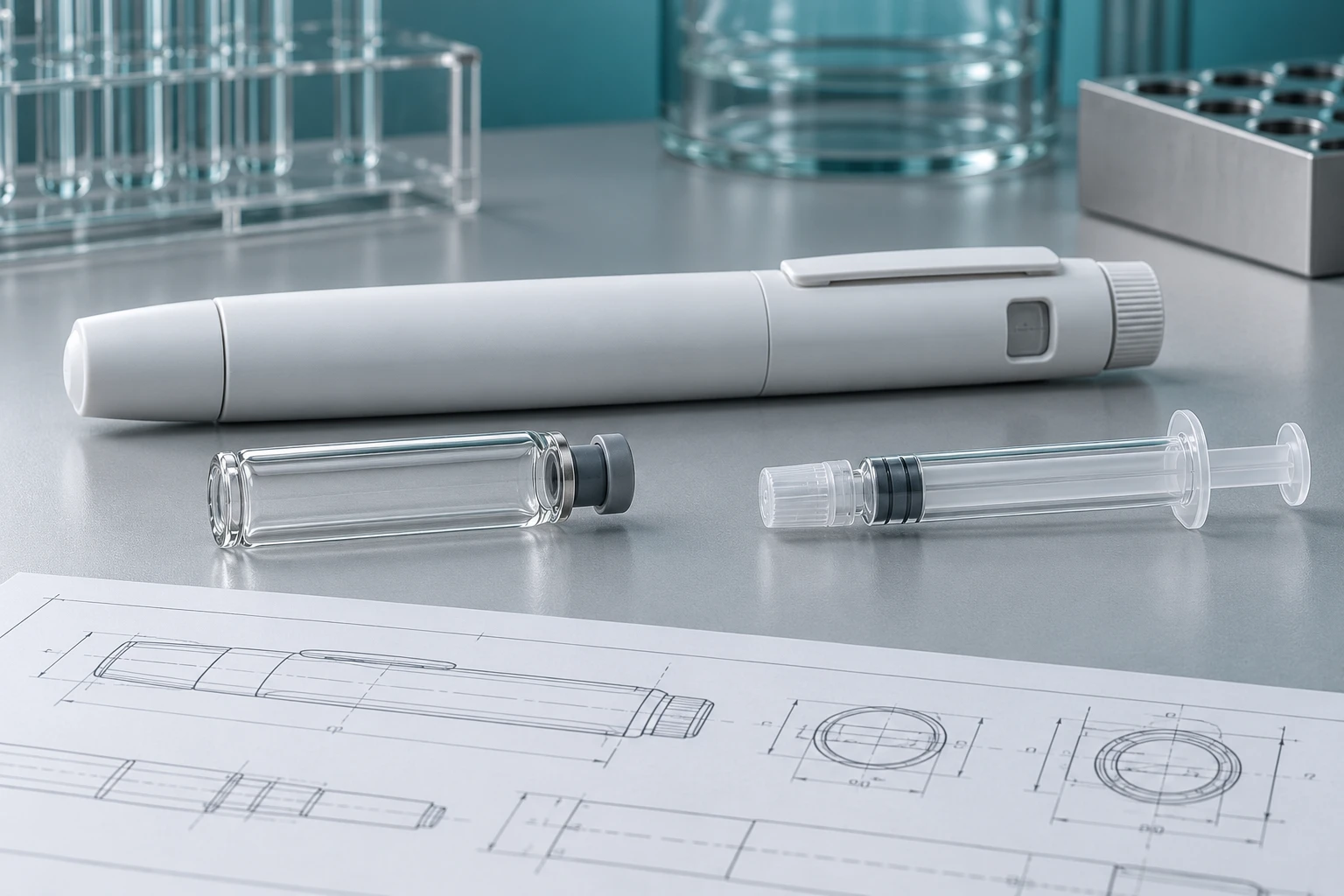
Separate mechanical fit from container suitability
A cartridge can enter a pen holder while leaving important requirements unresolved. The retention interface, stopper engagement and available mechanism travel depend on controlled dimensions and tolerances, rather than the nominal fill volume printed in a catalogue. A mechanical review should identify the actual container drawing and device revision so its conclusions remain attached to a defined configuration. Container suitability raises additional questions about the drug-contact components, formulation and intended storage conditions. These questions belong with the pharmaceutical development team and its container suppliers. They cannot be answered by measuring the exterior of a reference sample. For peptide and insulin injector pen projects, identify the exact finished-product presentation first. A branded example can clarify terminology, but neither its appearance nor its published capacity proves that an unrelated OEM pen supports that medicine.
Use regulatory references with their publication status intact
FDA's August 2026 draft guidance on container closure systems addresses quality evaluation for human drugs and biological products, including relevant systems within combination products. The agency labels it draft, not for implementation, with nonbinding recommendations. That status matters: a supplier should not describe a draft recommendation as a new mandatory approval criterion. The document can inform questions about the proposed system while the regulatory team identifies the applicable current requirements and supporting references. For procurement, distinguish the source's actual statements from the engineering actions proposed for your project. Ask who owns container specifications, who assesses formulation interaction and who maintains evidence when a component supplier changes. A useful reference register records the issuer, document title, status and review date. It does not turn the existence of a guidance document into evidence that a particular pen or formulation has been validated.
Build a compatibility record that survives a supplier change
The practical deliverable is a configuration-specific evidence register. Link each unresolved question to its owner and the record expected to answer it. Dimensional review may rely on controlled drawings and agreed measurements; formulation interaction and storage questions require evidence defined by the pharmaceutical team. Delivery performance and user-interface requirements need their own documented assessment of the intended assembled configuration. Keep these work packages separate so a completed fit review is not reported as completion of all compatibility work. When comparing suppliers, ask whether their proposed materials, container interfaces and assembly processes differ from the configuration already reviewed. Record any substitutions before accepting samples. Commercial discussions about logo placement, minimum quantities and packaging can proceed alongside this work, but they should not obscure open technical questions. No generic cartridge-capacity claim can replace this configuration and evidence record.
Procurement review checklist
- Container drawing, tolerances and revision controlled
- Retention, stopper engagement and mechanism travel assessed together
- Drug-contact and storage questions assigned to the pharmaceutical/container team
- Evidence register distinguishes fit, material suitability and delivery performance
Frequently Asked Questions
Are all 3 mL cartridges interchangeable in reusable injection pens?
No. Nominal capacity does not establish identical geometry, retention, stopper engagement, material suitability or delivered-volume performance.
Is the FDA August 2026 container-closure document a final requirement?
The cited FDA page labels it draft guidance, not for implementation. Its status and the applicable regulatory framework must be reviewed by the responsible regulatory team.
Sources and editorial scope
- FDA: Container Closure Systems for Human Drugs and Biological Products (August 2026 draft; not for implementation)
- FDA: Technical Considerations for Pen, Jet, and Related Injectors
References checked October 23, 2026. This article provides procurement and engineering review considerations. It does not report Hytanbio test results, reproduce proprietary standard requirements, certify a device or replace product-specific regulatory and clinical advice.