
By Hytanbio Tech | Updated
A reusable injection pen lifetime claim needs a defined use profile and evidence for the functions required throughout that profile. Specify calendar life separately from injection cycles, cartridge changes and other repeated operations. A mechanism that still moves at the end of cycling has not, by that observation alone, demonstrated the required delivered-dose performance.
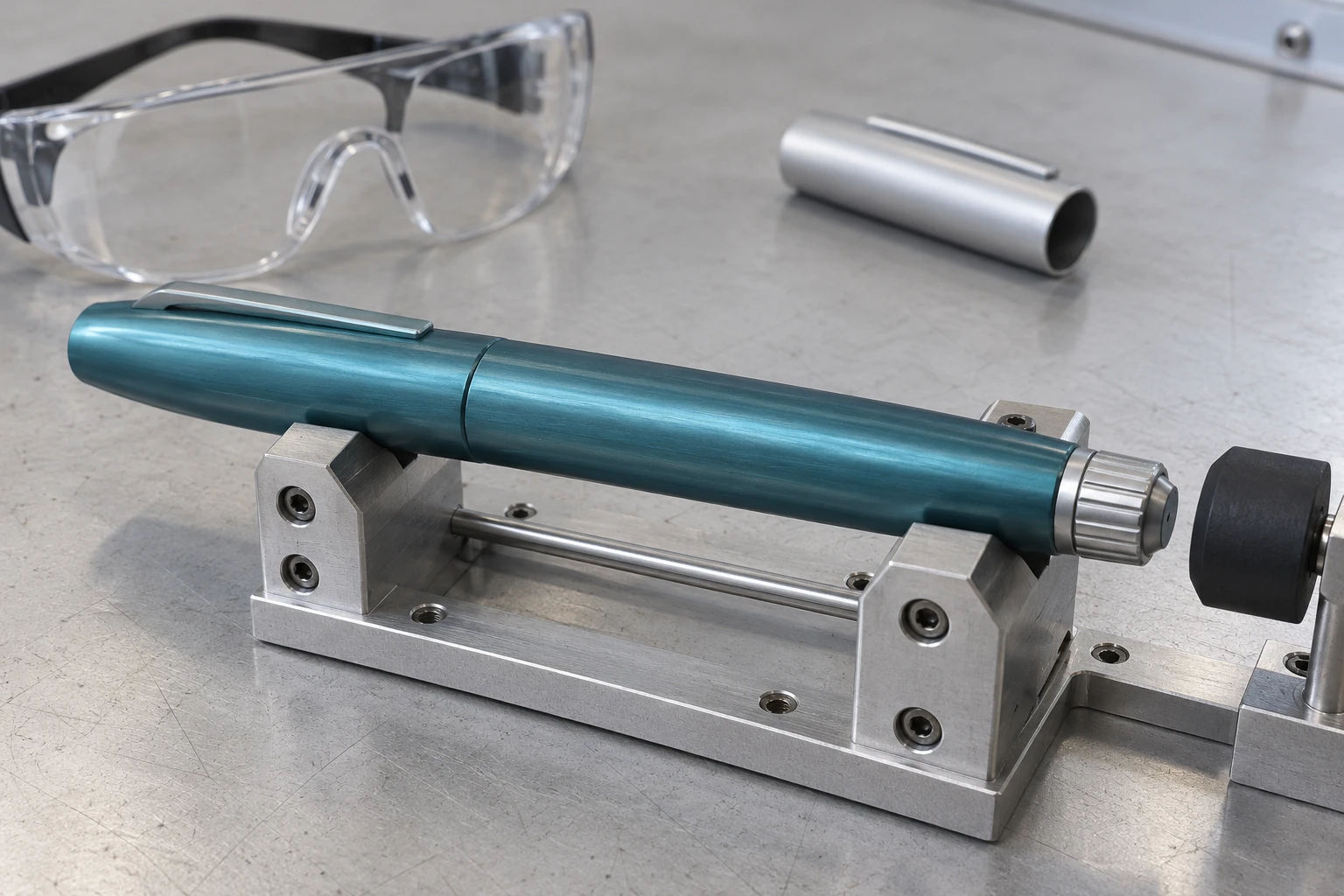
Define what one cycle means for the proposed pen
Write the sequence of operations before discussing a lifetime number. A dose-setting turn, a complete delivery operation and a cartridge replacement are different events; a supplier's cycle total may count only one of them. Identify the intended user, single-patient use boundary and approved container arrangement. ISO 11608-1 covers defined needle-based systems and includes replaceable-container configurations within its stated scope. That does not make a reusable pen body an approval to refill or interchange containers. The ISO catalogue also lists Amendment 1:2026, so request the precise edition and amendment basis used for any claimed assessment. The development team should translate the intended use profile into a justified evaluation plan. Keep the cycle definition in the report title or configuration section, not only in correspondence, so future buyers can understand what the stated durability evidence actually covers.
Separate the repeated operations
- Dose setting, correction and delivery under the defined use sequence
- Cartridge-holder opening, replacement and reset operations
- Needle attachment and removal where applicable
- Cap removal and replacement
- Permitted cleaning and interim storage conditions
Source references: ISO 11608-1:2022: Needle-based injection systems, public scope, ISO 11608-1:2022/Amd 1:2026, published April 2026.
Consider calendar aging and repeated use as separate exposures
A short cycling exercise and a long period of storage answer different questions. A device may experience repeated operations over a relatively short laboratory interval, while the intended user stores it between uses over a longer calendar period. Decide which exposures can affect the specified functions and how the evaluation will represent them. FDA's October 2026 performance draft discusses time-related changes, repeated use and relevant cleaning or interim storage when considering expiration support. It is a nonbinding draft for comment, not an implemented requirement. For a particular OEM pen, ask the developer to identify the aging rationale, the use history of each specimen and the sequence in which exposures are applied. Record assumptions where development data are incomplete. Keep the device-life assessment separate from the medicinal product's stability programme; the shelf life of a filled cartridge cannot be inferred from a mechanical cycling result.
Inputs for the lifetime plan
- Proposed calendar service life and intended operation counts
- Relevant storage, transport and permitted cleaning exposures
- Specimen use histories and sequence of conditioning
- Rationale for any accelerated approach and remaining confirmation work
- Separate responsibilities for device life and medicine stability
Source references: FDA: Essential Drug Delivery Performance Characteristics, October 2026 draft guidance, FDA: October 2026 draft guidance, sections IV-V and appendices B-C.
Check the required functions at justified points in the use profile
Agree which measurements will be made before, during and after the simulated use sequence. The selection should follow the product requirements and identified failure risks. For a reusable pen, the review may include the intended delivered-volume assessment, dose-selector behavior, reset operation and the relevant interface checks. State the proposed acceptance criteria before reviewing the results. Inspect visible wear, but do not let a cosmetic observation substitute for a functional result. An intact metal housing can coexist with an unresolved mechanism issue; conversely, a surface mark needs an agreed criterion before it becomes a rejection. Preserve unusual observations and explain how they affect the assessment. The team should justify its specimens, lots and relevant configuration variation with the laboratory. A buyer needs that rationale to judge whether the evidence supports the claimed model family or only the individual build evaluated.
Record against each measurement point
- Specimen and lot identifiers with accumulated use history
- Required function, method and acceptance criterion
- Measured result and any interrupted or failed operation
- Investigation outcome and decision on affected claims
Keep lifetime claims tied to the released configuration
The production model should remain traceable to the version evaluated for the proposed lifetime. Ask how a change to the mechanism, holder, material or purchased component will be assessed against that evidence. ISO 14971 provides a life-cycle risk-management framework; the project needs a specific decision about which changed conditions could affect its lifetime claim. Preserve the old and new configuration references in the change record, along with the rationale for retaining or revising the claim. Labeling should identify the permitted use and maintenance conditions established for the finished product. A generic reusable description does not tell the user how long that particular pen can remain in service. Procurement teams should request the current approved statement and evidence summary, including any limits on variants. Avoid copying a competitor's service-life number into an OEM specification without the supporting development rationale.
Questions before accepting a lifetime statement
- Which model and revision does the claim cover?
- What use sequence, aging conditions and acceptance criteria support it?
- Which variants or accessories are outside the evidence?
- Who approves changes and updates the supplied instructions?
Source references: ISO 14971:2019: Medical device risk management, public overview.
Frequently asked questions
Does reusable mean an injection pen can be refilled indefinitely?
No. Reuse of an identified pen body is distinct from refilling its container. The permitted container arrangement, service life and maintenance conditions must follow the approved product definition and instructions.
Can a cycle-count result be converted directly into years of pen life?
Not without a justified relationship to the intended use profile and relevant calendar-aging effects. State how cycles were counted and assess storage and other exposures separately where they can affect the required functions.
Does a durable metal shell prove dose accuracy at end of life?
No. The housing condition is one observation. The required delivered-dose and other functional performance need their own defined assessments at the appropriate points in the lifetime evaluation.
Is there a standard lifetime shared by all reusable OEM pens?
No universal value can be assigned from the reusable label alone. Ask for the product-specific claim, configuration, use definition, evaluation rationale and limitations. The responsible developer must justify the statement for the intended product.
References and editorial scope
- ISO 11608-1:2022: Needle-based injection systems, public scope
- ISO 11608-1:2022/Amd 1:2026, published April 2026
- FDA: Essential Drug Delivery Performance Characteristics, October 2026 draft guidance
- FDA: October 2026 draft guidance, sections IV-V and appendices B-C
- ISO 14971:2019: Medical device risk management, public overview
Prepared by Hytanbio Tech for OEM procurement and development discussions. Sources checked October 31, 2026. Public standard descriptions identify scope; the responsible teams need controlled standards and product-specific protocols for formal evaluation. The checklists are editorial recommendations, not quoted standard clauses, patient instructions, regulatory advice or Hytanbio test results. No certification or product authorization is asserted. Recheck draft guidance and standard editions before relying on them for a project.