
By Hytanbio Tech | Updated
An approved injection pen sample needs a controlled production definition before repeat manufacturing. Agree the drawings, materials, inspection methods and release responsibilities, then specify which supplier changes require notice and approval. The design owner and product applicant should determine what additional verification, validation or regulatory assessment a change needs.
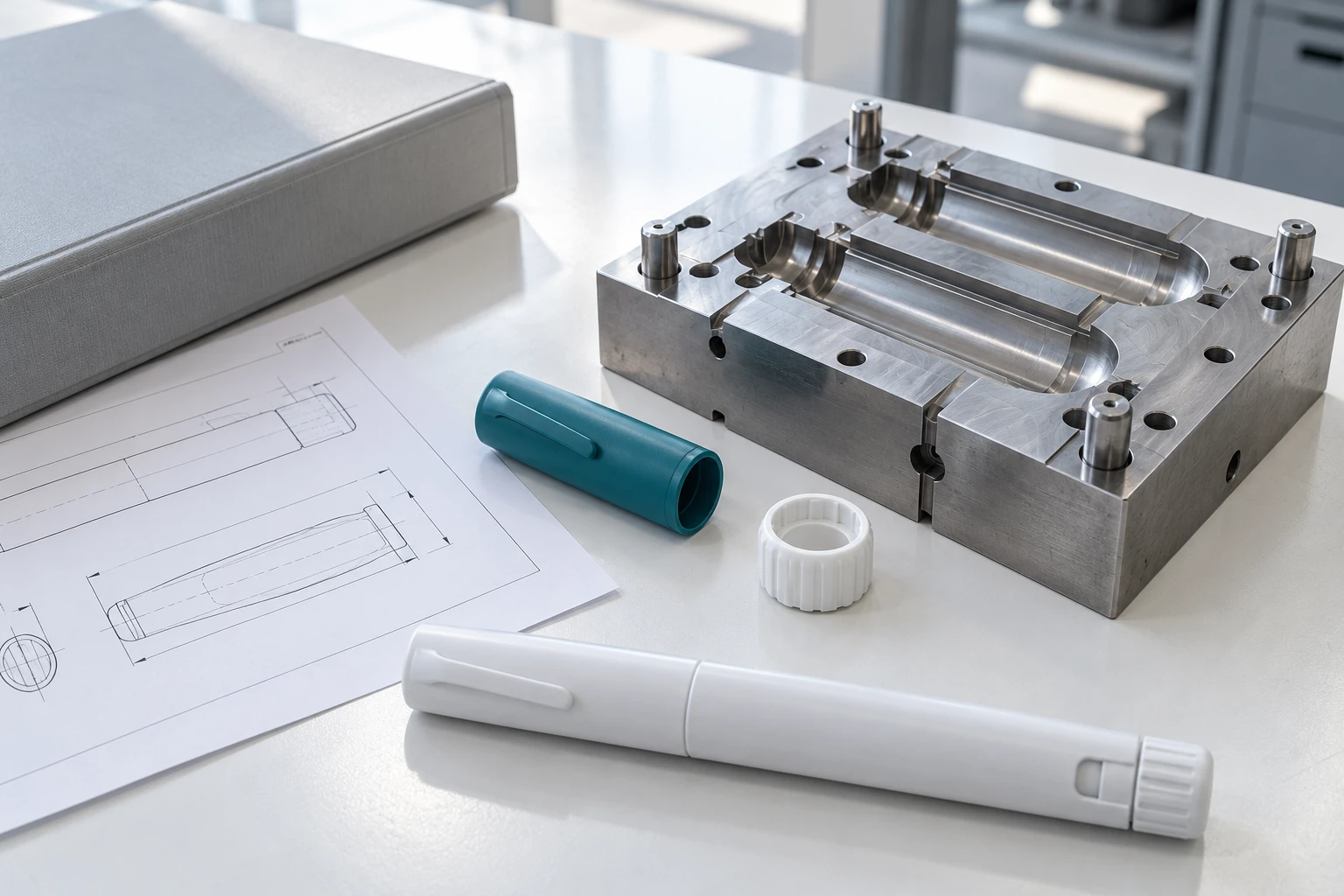
Translate sample approval into an identifiable production baseline
A signed sample can establish an agreed appearance or feature, but the order still needs a reproducible definition. Ask which drawing revision, material specification and component references describe the accepted pen. Distinguish customer-visible choices such as colour and logo from characteristics that affect assembly or performance. Identify the approved acceptance criteria and how the manufacturer will check them in production. ISO 13485:2016 provides a medical-device quality-management framework; it does not establish the contents of this project's transfer package or demonstrate that its process has been validated. The buyer should request the relevant records and agree how confidential technical information can be reviewed. Record who owns the design and who can authorize revisions. If an accepted prototype used components or processes that will differ from production, list those differences before transfer approval. A sample signature should leave no uncertainty about which version purchasing is allowed to reorder.
Minimum baseline fields for discussion
- Product identifier and approved drawing revision
- Bill of materials and controlled purchased-part references
- Material, finish and artwork specifications
- Inspection methods, acceptance criteria and release authority
- Known differences between prototype and intended production
Source references: ISO 13485:2016: Medical device quality management systems.
Keep current quality-system references in the agreement
For a United States programme, check the quality-system references used in supplier questionnaires and contracts. FDA states that its Quality Management System Regulation became effective on February 2, 2026 and incorporates ISO 13485:2016 by reference into the revised Part 820 framework. Applicability depends on the organization's role and the product; a supplier should not describe certification alone as FDA approval. The responsible regulatory team should determine the obligations of the finished-device manufacturer, component supplier and combination-product applicant. In the agreement, map responsibilities to actual activities and records: design decisions, purchasing controls, production release and handling of deviations. Avoid leaving those responsibilities as unexplained acronyms in an attachment. Where an old document still uses legacy terminology, ask for a mapping to the current requirements rather than assuming that renaming a folder changes the underlying process. Keep any identified gap assigned to an owner and a closure decision.
Responsibilities to allocate explicitly
- Design authority and technical-document access
- Supplier approval and purchased-component specifications
- Production acceptance and shipment authorization
- Deviation review, complaint communication and change approval
- Regulatory assessment of the final intended product
Source references: FDA: Quality Management System Regulation, effective February 2, 2026.
Assess a proposed change against the approved evidence
Require enough detail in a change notice to compare the proposal with the production baseline. A description such as equivalent material or improved tooling is too broad for an engineering decision. Request the old and new references, the reason for the change and the proposed implementation point. The design owner should identify affected requirements, interfaces and risk controls, then decide whether existing evidence remains applicable. ISO 14971 describes a risk-management process spanning the device life cycle; a project still needs its own documented assessment of the particular change. For example, a hypothetical resin substitution could prompt review of dimensions, assembly behavior or other affected requirements. The appropriate scope depends on the design and the substitution, not a universal retest list. Keep the assessment, additional work and approval together so the first shipment under the revised configuration can be traced to a clear decision.
Useful content in a supplier change notice
- Old and proposed references, revisions and affected components
- Reason, intended benefit and known technical differences
- Affected evidence, requirements and risk-control assessment
- Planned evaluation, acceptance decision and approval signatures
- First affected lot or serial reference and implementation date
Source references: ISO 14971:2019: Medical device risk management, public overview.
Make pilot results and lot genealogy available for review
Define what the production-transfer review will receive before the pilot lot is assembled. The project may need inspection results, assembly observations, equipment or fixture references and records explaining departures from the intended process. The responsible technical team should determine which processes require validation and which results can be verified by subsequent inspection. A good first lot does not resolve every question about repeat production. Ask how materials and purchased parts will be linked to finished lots, and how a later complaint can be traced to the relevant revision and build records. Keep commercial acceptance separate from the technical release decision when unresolved findings remain. The quality agreement should explain how deviations are authorized and whether affected stock must be segregated pending review. Procurement can then order against a known release status rather than relying on an email saying the factory has moved into mass production.
Transfer-review questions for the quotation
- Which production and inspection records will the buyer receive?
- Who resolves deviations and approves the transfer decision?
- How are supplier lots linked to finished-device lots?
- How will an unapproved substitution be contained?
- Which open items prevent a shipment from being released?
Frequently asked questions
Is an approved injection pen sample enough for mass production?
The sample should be linked to controlled drawings, materials, component references and acceptance criteria. The responsible teams also need to resolve differences between the prototype and the intended production process before technical release.
Does ISO 13485 certification mean an injection pen is FDA approved?
No. A quality-management-system certificate and regulatory authorization of a specific product are different matters. Assess the relevant manufacturer role, product requirements and submission route with the responsible regulatory team.
Must every supplier change trigger the same tests?
No. Document the change and assess its effect on requirements, interfaces, risk controls and existing evidence. The responsible technical and regulatory teams should justify the additional work and any submission implications.
What is the most useful traceability field for a changed component?
Link the new component and drawing revision to the first affected finished lot or serial reference. Retain the change decision and supporting records so later shipments and complaints can be matched to the configuration actually supplied.
References and editorial scope
- ISO 13485:2016: Medical device quality management systems
- FDA: Quality Management System Regulation, effective February 2, 2026
- ISO 14971:2019: Medical device risk management, public overview
Prepared by Hytanbio Tech for OEM procurement and development discussions. Sources checked October 31, 2026. Public standard descriptions identify scope; the responsible teams need controlled standards and product-specific protocols for formal evaluation. The checklists are editorial recommendations, not quoted standard clauses, patient instructions, regulatory advice or Hytanbio test results. No certification or product authorization is asserted. Recheck draft guidance and standard editions before relying on them for a project.