
By Hytanbio Tech | Updated
Short answer. Specify the complete shipping configuration before commissioning injection pen packaging tests: device revision, protective insert, carton, closure and shipment route. Define the condition the pens must meet after testing. A carton that looks intact can still contain a displaced cap or a damaged device.
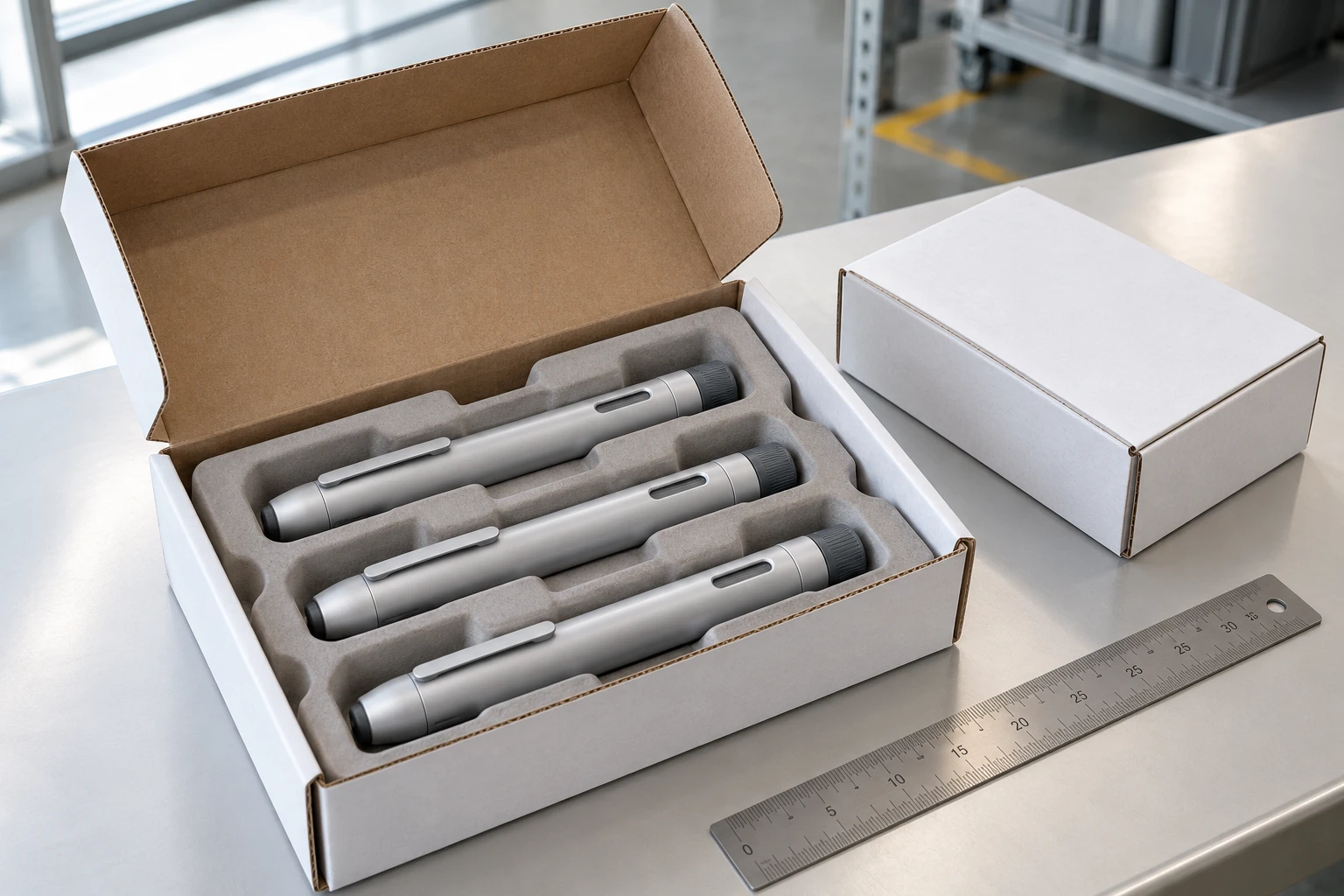
Choose a transit test for the shipment route
Ask how the order will travel before choosing a test reference. A sample carton sent by courier and a palletized production shipment encounter different distribution conditions. ISTA lists Procedure 3A for packaged products shipped through parcel delivery systems at 70 kg (150 lb) or less. That published scope identifies a possible starting point; it does not establish that every shipment below that mass belongs in the same test plan. ASTM D4169 provides a framework for evaluating shipping units against anticipated distribution hazards and directs readers to consider D7386 for single-parcel packages. The buyer, packaging specialist and test laboratory should agree on the route assumptions and applicable method. Record the selected edition and the reason for selecting it. A quotation that says only transit tested leaves the actual shipment configuration and evaluation scope unresolved.
Inputs for the laboratory brief
- Parcel, pallet or other intended distribution route
- Loaded carton mass, dimensions and orientation assumptions
- Device quantity, insert revision and carton construction
- Closure materials and any secondary packaging
- Proposed conditioning and inspection responsibilities
- Applicable method, edition and agreed acceptance criteria
References: ISTA: Test Procedures, including Procedure 3A, ASTM International: ASTM D4169-23e1, Performance Testing of Shipping Containers and Systems.
Write device acceptance criteria before the carton is tested
Inspection should follow the damage risks identified for the proposed pen and packout. For example, a cap retained by a shallow insert might move during distribution even when the shipping carton remains presentable. This is a hypothetical failure mode, not a Hytanbio test result. The project team should decide whether cap position, housing damage, selector condition, device retention and the agreed functional checks belong in the post-test review. Identify who will perform each check and which device drawing defines an acceptable condition. Photograph and record the starting configuration so later observations have a clear reference. Keep cosmetic criteria separate from functional criteria; a scuffed outer carton and a damaged selector require different decisions. If a requirement is still undefined when samples are packed, record the gap before the laboratory begins its work.
A useful result record
- Sample identifiers and device drawing revision
- Pre-test condition and agreed inspection checklist
- Observed condition after the specified evaluation
- Acceptance decision, deviations and unresolved findings
Separate transit protection from sterile-barrier and drug requirements
An empty OEM pen body, a sterile device component and a filled medicinal product can require different packaging evidence. ISO 11607-1:2019 addresses packaging intended to maintain the sterility of terminally sterilized medical devices until use. Its public scope also notes that additional requirements can be necessary for drug-device combinations. The standard therefore needs a scope assessment before it appears in a pen supplier specification. A protective tray for empty devices does not become a sterile barrier because it looks like medical packaging. For filled peptide or insulin presentations, the pharmaceutical applicant must define any product-specific storage and transport requirements. A mechanical transit evaluation cannot establish formulation stability or a permitted temperature excursion. Keep these responsibilities visible in the development agreement so an empty-device packaging quotation is not mistaken for validation of the finished medicine distribution system.
References: ISO: ISO 11607-1:2019, packaging for terminally sterilized medical devices.
Keep the approved packout tied to production shipments
A packaging report is useful only if the shipped configuration can be traced back to the configuration evaluated. Record the carton specification, insert drawing, device count, closure method and relevant supplier references in the approved packout record. Warehouse instructions should identify which revision applies and how departures are handled. ISTA discusses retest considerations when products or packaging change; the project team still has to decide what a particular change means for its evidence. Replacing an insert material, changing carton dimensions or increasing the quantity may alter the assumptions behind an earlier evaluation. Request a documented impact review before carrying the previous result forward. Retain the decision with the change record, including any additional evaluation agreed with the laboratory. This gives procurement and production staff a common reference when a later shipment differs from the samples originally accepted.
Questions to settle in the OEM quotation
- Who owns the packaging drawings and releases revisions?
- Which packout is covered by existing evidence?
- Who approves substitutions or changes in device quantity?
- Which records accompany the agreed production shipment?
References: ISTA: Getting Started with Design and Testing, including retest considerations.
Frequently Asked Questions
Does an intact outer carton prove the injection pens passed?
No. Acceptance should include the device and packaging conditions specified in the agreed plan. The pens can require checks for retention, cap position, damage and defined functional requirements even when the carton appears intact.
Does every injection pen shipment need ISTA 3A?
No. ISTA 3A has a stated parcel-delivery scope. Select an appropriate evaluation with the packaging specialist and laboratory using the actual shipment route and configuration.
Does transit testing establish drug stability or sterile-barrier performance?
A transit result addresses the configuration and acceptance criteria evaluated. Drug stability and any sterile-barrier requirements need their own applicable evidence; they cannot be inferred from an outer-carton result.
Sources and editorial scope
- ISTA: Test Procedures, including Procedure 3A
- ASTM International: ASTM D4169-23e1, Performance Testing of Shipping Containers and Systems
- ISO: ISO 11607-1:2019, packaging for terminally sterilized medical devices
- ISTA: Getting Started with Design and Testing, including retest considerations
References checked October 24, 2026. These are procurement review considerations based on public source descriptions, not a laboratory protocol. No Hytanbio test results or certification claims are reported. The responsible technical and regulatory teams should determine the applicable requirements for the intended product and market.